
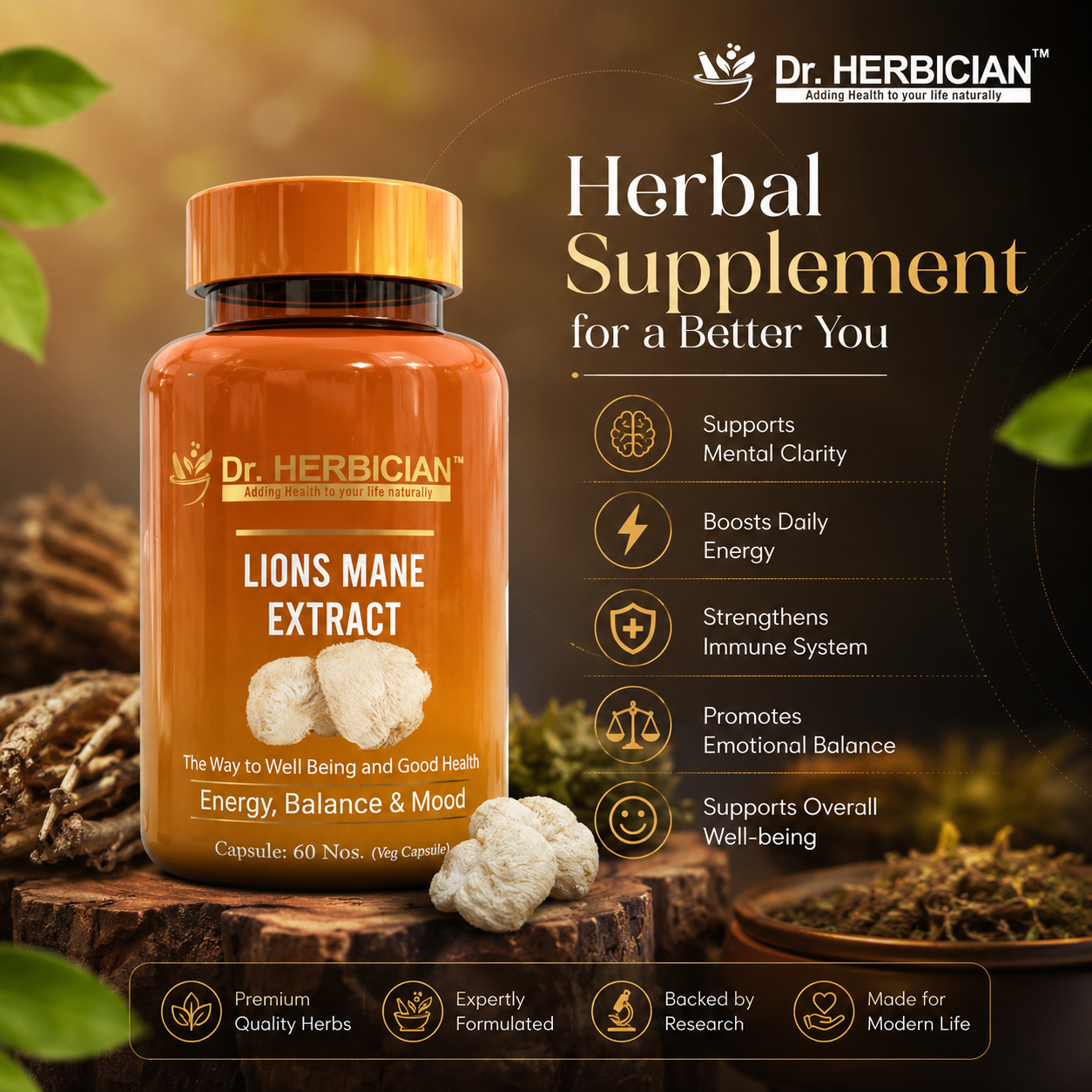
What Are Herbal Supplements?
Herbal supplements are products made from plants, plant extracts, mushrooms, or botanical ingredients that are meant to support everyday nutrition and wellness. Unlike medicines, they aren’t designed to diagnose, treat, or cure any illness. Instead, they provide nutritional building blocks — compounds your body may not get enough of through a typical modern diet.
How they work: Plants naturally contain compounds like antioxidants, polysaccharides, amino acids, and adaptogenic compounds. When these are extracted and concentrated into a supplement, they give your body a more concentrated dose of what you’d otherwise get in small amounts from food.
Herbs vs. medicines: Medicines are typically single, isolated compounds designed to treat a specific condition, tested and regulated as drugs. Herbal supplements are whole-plant or extracted-plant products intended to support general wellness as part of a healthy lifestyle — not to replace medical treatment.
Herbal supplements vs. multivitamins: Multivitamins are formulated to fill nutritional gaps with synthetic or isolated vitamins and minerals (like Vitamin C, D, B12, zinc, iron). Herbal supplements, on the other hand, come from whole botanical sources and often provide additional plant compounds that vitamins alone don’t offer. Many people in Trinidad and Tobago actually use both together as part of a complete wellness routine.
Common forms of herbal supplements:
- Capsules — the most common and convenient form, easy to dose and travel with
- Powders — versatile, can be mixed into smoothies, teas, or juices
- Extracts — concentrated liquid or capsule forms with higher potency per serving
- Tablets — compressed forms, often used for standardized dosing
- Liquid supplements — tinctures or drops, absorbed quickly
- Gummies — a palatable option, though often lower in potency than capsules or extracts
Why More People in Trinidad and Tobago Are Choosing Herbal Supplements.
Life in Trinidad and Tobago has changed a lot over the last decade, and so have people’s wellness habits.
Busy lifestyles: Between long commutes across Port of Spain, San Fernando, and Chaguanas, and demanding work schedules, many people simply don’t have time to plan perfectly balanced meals every day.
Modern diets: Convenience foods, takeout, and processed snacks have become a bigger part of daily eating, which can mean fewer of the nutrients found in traditional home-cooked meals.
Healthy aging: As more Trinbagonians focus on staying active well into their 50s, 60s, and beyond, there’s growing interest in supplements that support long-term wellness rather than quick fixes.
Preventive wellness: Instead of waiting until something feels wrong, more people are taking a proactive approach — eating better, moving more, and supplementing sensibly.
Plant-based nutrition: There’s a broader shift toward natural and plant-based products, driven by interest in cleaner ingredient lists and fewer artificial additives.
Growing awareness: Social media, wellness communities, and greater access to health information have made people more curious about what they put into their bodies — and more willing to research before they buy.
Benefits of Herbal Supplements.
When chosen and used sensibly, herbal supplements can be a useful part of a broader wellness routine. Here’s what they generally offer:
- Daily nutritional support — helping fill small gaps left by an inconsistent diet
- General wellness — supporting the body’s everyday functions rather than targeting one specific issue
- Support for an active lifestyle — useful for people who exercise, walk, or stay physically active regularly
- Support for focus and productivity — some botanicals are traditionally associated with mental clarity during long work or study sessions
- Support for healthy aging — many herbal ingredients are used as part of long-term wellness routines
- Plant-based ingredients — appealing to people who prefer natural over synthetic where possible
- Convenient daily use — a capsule or scoop of powder is far easier to fit into a busy morning than meal-prepping every nutrient your body needs
It’s worth being honest here: no supplement is a substitute for sleep, water, movement, and a reasonably balanced diet. Herbal supplements work best as an addition to healthy habits, not a replacement for them.
Different Types of Herbal Supplements.
There are dozens of herbal supplements on the market, but a handful come up again and again in Trinidad and Tobago. Here’s how they compare.
Ashwagandha — An adaptogenic herb traditionally used to help the body manage everyday stress. Best for people dealing with demanding work schedules or busy family life. Typically taken once daily, often in the evening.
Lion’s Mane — A functional mushroom valued for its association with cognitive wellness, focus, and memory support. Best for students, professionals, and anyone doing mentally demanding work. Usually taken in the morning.
Turmeric — Contains curcumin, a compound associated with general wellness support. Best for people looking for daily antioxidant-style support. Often taken with meals for better absorption.
Spirulina — A blue-green algae rich in protein and nutrients. Best for people wanting a plant-based nutritional boost. Commonly used as a powder in smoothies.
Moringa — Sometimes called a “superfood” tree, rich in vitamins and minerals. Best for general daily nutrition. Available as powder or capsules.
Sea Moss — A popular Caribbean botanical, valued locally for general wellness and traditionally used across the region. Best for people wanting a familiar, regionally rooted supplement. Often taken as a gel or capsule.
Ginseng — Traditionally associated with energy and stamina support. Best for active individuals. Usually taken in the morning.
Maca — A root traditionally used for energy and stamina. Best for active lifestyles. Available as powder or capsules.
Milk Thistle — Traditionally associated with liver wellness support. Best for people focused on general detox-style routines. Usually taken as a capsule.
Each of these serves a slightly different purpose, which is why many people build a small “stack” — for example, Ashwagandha in the evening and Lion’s Mane in the morning — rather than relying on just one product.
Why Lion's Mane Is Becoming One of the Most Popular Herbal Supplements.
What Lion’s Mane is: Lion’s Mane (Hericium erinaceus) is a distinctive, shaggy white mushroom that grows on hardwood trees. It gets its name from its unusual appearance, which resembles a lion’s mane.
Where it comes from: Lion’s Mane grows naturally in parts of Asia, North America, and Europe, and has been cultivated for centuries in traditional East Asian food and wellness practices.
Traditional use: In traditional Chinese and Japanese culture, Lion’s Mane has long been valued both as a food ingredient and as part of everyday wellness practices, often prepared as a tea or added to cooking.
Modern popularity: In recent years, Lion’s Mane has become one of the most talked-about functional mushrooms worldwide, appearing in everything from coffee blends to standalone extract capsules. That popularity has now reached Trinidad and Tobago, where wellness-focused shoppers are increasingly seeking it out.
Scientific interest: Researchers have taken a growing interest in the compounds found in Lion’s Mane, and studies continue to explore its properties. It’s important to note this remains an area of ongoing research, and Lion’s Mane should not be viewed as a treatment for any condition.
Lifestyle benefits: For everyday users, Lion’s Mane is generally taken as part of a morning routine, often alongside coffee or breakfast, as a way to support general cognitive wellness during the day.
General cognitive wellness support: People who take Lion’s Mane often do so hoping to support mental clarity and focus during demanding periods — exam season, project deadlines, or simply a long workday. It’s best understood as a wellness-supporting addition to a healthy lifestyle, not a guaranteed fix for any specific issue.
How to Choose High-Quality Herbal Supplements.
Not all supplements are created equal, and in a market with so many options, knowing what to look for matters more than the price tag.
- Ingredient quality — Look for clearly named botanical sources (e.g., “Hericium erinaceus fruiting body extract” rather than a vague “mushroom blend”).
- Manufacturing standards — Reputable brands manufacture in facilities that follow Good Manufacturing Practice (GMP) standards.
- Third-party testing — Independent lab testing helps confirm that what’s on the label matches what’s in the capsule.
- Purity — Check for fillers, unnecessary additives, or artificial colors that add no value.
- Dosage — A quality supplement lists the exact amount of active ingredient per serving, not just “proprietary blend.”
- Transparency — Brands that are upfront about sourcing, extraction methods, and testing tend to be more trustworthy.
- Packaging — Look for sealed, tamper-evident packaging that protects the product from humidity (especially important in Trinidad and Tobago’s climate).
- Storage — Check that storage instructions are included, since heat and moisture can degrade herbal ingredients over time.
- Brand reputation — Look for real customer reviews, a clear company background, and responsive customer service.
Who Should Consider Herbal Supplements?
- Office workers who want extra support getting through long, mentally demanding days
- Students studying for exams who want to support focus during long study sessions
- Entrepreneurs managing multiple responsibilities with limited time for perfectly balanced meals
- Professionals in high-pressure roles looking for daily wellness support
- Older adults interested in supporting healthy aging as part of their routine
- Active individuals who exercise regularly and want additional nutritional support
- Busy parents who often put their own nutrition last while managing a household
- Anyone interested in daily wellness who wants a natural addition to their routine
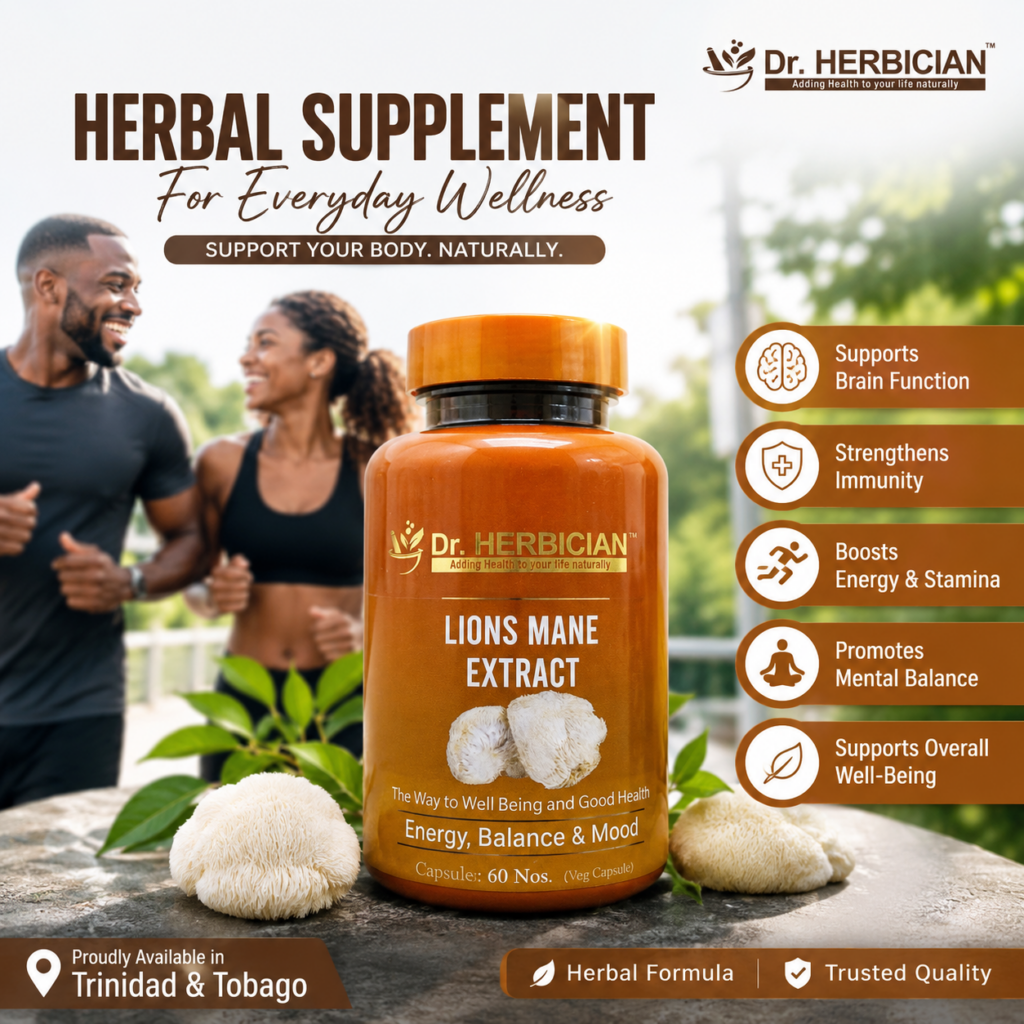
How to Use Herbal Supplements Properly.
Build a daily routine: Supplements work best when taken consistently, ideally at the same time each day, so they become part of your normal routine rather than something you forget.
Morning vs. evening: As a general pattern, energizing or focus-oriented botanicals like Lion’s Mane and Ginseng are often taken in the morning, while calming adaptogens like Ashwagandha are often taken in the evening. Always follow the specific product’s label instructions.
With or without food: Many herbal extracts are better absorbed when taken with a meal, which can also reduce the chance of an upset stomach. Check your product’s label for specific guidance.
Consistency matters: Herbal supplements are not designed for overnight results. Most people who notice a difference in how a wellness routine feels do so after several weeks of consistent use, not a single dose.
Storage: Keep supplements in a cool, dry place, away from direct sunlight and away from bathroom humidity, which can shorten shelf life.
Lifestyle habits: Pair your supplement routine with the basics — enough water, reasonable sleep, and regular movement — since these amplify whatever benefit a supplement can offer.
Common Mistakes When Buying Herbal Supplements.
- Buying only by price — the cheapest option often uses lower-quality or less-concentrated ingredients
- Ignoring the ingredient list — vague terms like “proprietary blend” can hide low dosages
- Choosing unknown brands with no transparency or testing information
- Taking excessive amounts, assuming “more is better” (it isn’t — follow the label)
- Expecting overnight results instead of giving a routine several weeks to settle in
- Skipping label instructions, including timing and recommended serving size
Herbal Supplement Comparison Table
| Category | Purpose | Main Ingredients | Best Users | Daily Use | Advantages |
|---|---|---|---|---|---|
| Herbal Supplements | General wellness support from plant sources | Ashwagandha, Lion’s Mane, Turmeric, Sea Moss | People wanting natural, plant-based support | 1x daily, varies by product | Whole-plant compounds, natural sourcing |
| Multivitamins | Fill nutritional gaps | Vitamins A–E, B-complex, minerals | Anyone with an inconsistent diet | 1x daily | Broad nutrient coverage |
| Vitamin Tablets | Target a specific vitamin need | Single vitamins (e.g., Vitamin D, C) | People with a known specific gap | 1x daily | Simple, targeted dosing |
| Mineral Supplements | Support mineral intake | Magnesium, zinc, iron, calcium | People with specific mineral needs | 1x daily | Addresses common deficiencies |
| Functional Mushrooms | Support cognitive & general wellness | Lion’s Mane, Reishi, Cordyceps | Professionals, students, active adults | 1x daily, usually morning | Unique plant/fungal compounds not found in typical multivitamins |
Myths vs Facts About Herbal Supplements.
- Myth: Herbal supplements work instantly. Fact: Most require weeks of consistent use before any difference in routine is noticed.
- Myth: Natural means completely risk-free. Fact: Natural ingredients can still interact with medications or conditions — always check with a pharmacist or doctor if unsure.
- Myth: More capsules mean faster results. Fact: Exceeding the recommended dose doesn’t speed things up and may cause discomfort.
- Myth: All Lion’s Mane products are the same. Fact: Quality varies enormously based on extraction method, concentration, and sourcing.
- Myth: Herbal supplements can replace a balanced diet. Fact: They’re designed to support, not substitute for, healthy eating.
- Myth: If it’s sold in a pharmacy, it must be high quality. Fact: Availability doesn’t guarantee quality — always check the label and sourcing.
- Myth: Herbal supplements are only for older adults. Fact: Students, professionals, and active individuals of all ages use them.
- Myth: You can’t take more than one herbal supplement at a time. Fact: Many people combine supplements (like Lion’s Mane and Ashwagandha) as part of a routine, though it’s wise to introduce one at a time.
- Myth: Expensive always means better. Fact: Price should reflect ingredient quality and testing, not just branding.
- Myth: Herbal supplements are regulated exactly like medicine. Fact: They are regulated as supplements, not drugs, which is why they aren’t marketed to treat or cure conditions.
Expert Tips for Choosing Better Supplements.
- Read the ingredient label first, not the marketing on the front of the box
- Check the dosage against what’s typically used in that ingredient category
- Match the supplement to your lifestyle — a student’s needs differ from a retiree’s
- Keep your diet in check — supplements work better alongside vegetables, protein, and whole foods
- Stay hydrated — water supports how your body processes and absorbs nutrients
- Prioritize sleep — no supplement compensates for chronic sleep loss
- Move your body regularly — even a daily walk supports overall wellness
- Be consistent — the biggest factor in whether a supplement “works” for someone is whether they actually take it every day
Frequently Asked Questions.
1. What exactly are herbal supplements? They’re products made from plants, plant extracts, or mushrooms designed to support daily nutrition and general wellness.
2. Are herbal supplements effective? Many people find them a useful addition to a healthy lifestyle, though effectiveness varies by ingredient, quality, and individual routine.
3. Which herbal supplements are worth buying first? Ashwagandha and Lion’s Mane are two of the most popular starting points, covering stress support and cognitive wellness respectively.
4. What should a complete beginner choose? Start with one supplement, follow the label dosage, and give it several weeks before adding another.
5. How do herbal supplements compare with multivitamins? Multivitamins fill basic nutrient gaps; herbal supplements provide additional plant compounds not found in a standard multivitamin.
6. Are herbal supplements safe? Generally yes, when sourced from reputable brands and used as directed. Anyone with a medical condition or on medication should check with a doctor or pharmacist first.
7. How long before I notice a difference? Most people give a supplement 3–6 weeks of consistent daily use before evaluating whether it fits their routine.
8. What ingredients should I look for on a label? Clearly named botanical sources, exact dosages, and any third-party testing certifications.
9. Where can I buy herbal supplements in Trinidad and Tobago? Pharmacies, health stores, and reputable online retailers that ship locally are common sources.
10. What makes one supplement better than another? Ingredient quality, transparent dosing, manufacturing standards, and independent testing.
11. Can I take Lion’s Mane every day? Many people take it daily as part of a morning routine, following the label’s recommended serving.
12. Should I take supplements with food? Many herbal extracts absorb better with a meal — check your specific product’s instructions.
13. Can herbal supplements replace my multivitamin? They serve different purposes and are often used together rather than as replacements for one another.
14. Is it normal to combine two herbal supplements? Yes, many people combine complementary ones (like Lion’s Mane in the morning and Ashwagandha in the evening).
15. Do herbal supplements expire? Yes — always check the expiration date and store them properly to preserve potency.
16. Is Sea Moss the same as Lion’s Mane? No — Sea Moss is a marine algae, while Lion’s Mane is a mushroom. They offer different types of support.
17. Can students benefit from herbal supplements? Many students use focus-oriented supplements like Lion’s Mane during study periods.
18. What’s the biggest mistake beginners make? Expecting instant results and giving up too soon instead of staying consistent.
19. Should I consult a doctor before starting? If you’re pregnant, nursing, on medication, or managing a health condition, it’s wise to check with a healthcare professional first.
20. How do I know if a brand is trustworthy? Look for transparent labeling, clear sourcing information, third-party testing, and genuine customer reviews.
Why Choose Dr. Herbician Lion's Mane Extract?
Once you understand what makes a herbal supplement genuinely high quality, it becomes much easier to see why Dr. Herbician Lion’s Mane Extract stands out for people in Trinidad and Tobago.
Premium ingredients: Dr. Herbician sources carefully selected Lion’s Mane extract, rather than relying on vague, unlabeled “mushroom blends.”
Quality manufacturing: The product is produced with attention to consistency and quality control, so every capsule reflects the same standard.
Carefully selected extracts: Rather than cutting corners with fillers, Dr. Herbician focuses on concentrated, purposeful extraction.
Convenient daily use: A simple capsule format makes it easy to build into a morning routine, no extra prep required.
Suitable for wellness-focused lifestyles: Whether you’re a student, a working professional, or someone simply looking to support healthy aging, it fits naturally into a daily wellness plan.
Available in Trinidad and Tobago: No need to import from overseas — Dr. Herbician Lion’s Mane Extract is accessible locally.
Excellent value: Quality ingredients at a price built for everyday use, not just occasional treat-yourself purchases.
As with any herbal supplement, Dr. Herbician Lion’s Mane Extract is intended to support general wellness as part of a healthy lifestyle — not to diagnose, treat, or cure any condition.
Conclusion.
Choosing the right herbal supplement doesn’t have to be overwhelming. Once you understand what herbal supplements are, how they differ from multivitamins, and what separates a high-quality product from a low-effort one, you’re in a much stronger position to make a confident decision.
For people across Trinidad and Tobago juggling busy schedules, modern eating habits, and the everyday goal of feeling well, herbal supplements can be a simple, natural addition to a healthy routine — as long as they’re chosen carefully and used consistently.
If you’re looking for a place to start, Dr. Herbician Lion’s Mane Extract offers a straightforward, quality-focused option worth exploring as part of your daily wellness routine.