
Introduction.
Does your hair feel dry and rough by mid-afternoon, no matter how much product you use? Does your skin lose its glow within hours of stepping outside in Trinidad and Tobago’s heat? You’re not imagining it. Between the humidity, the sun, the salt air, and frequent washing, local hair and skin lose moisture fast — and most store-bought products only patch the problem for a few hours.
A lot of people end up cycling through leave-in creams, serums, and conditioners that promise a lot and deliver very little. That’s often because the real issue isn’t a lack of products — it’s a lack of the right kind of moisture, applied consistently.
This guide breaks down what castor oil actually is, why it has become a staple in hair and body care routines across Trinidad and Tobago, how to use it correctly, and what to look for so you don’t waste money on a low-quality bottle. Along the way, we’ll show you how Dr. Herbician Castor Oil can fit into a simple, realistic self-care routine — without overpromising what any single oil can do.
What Is Castor Oil?
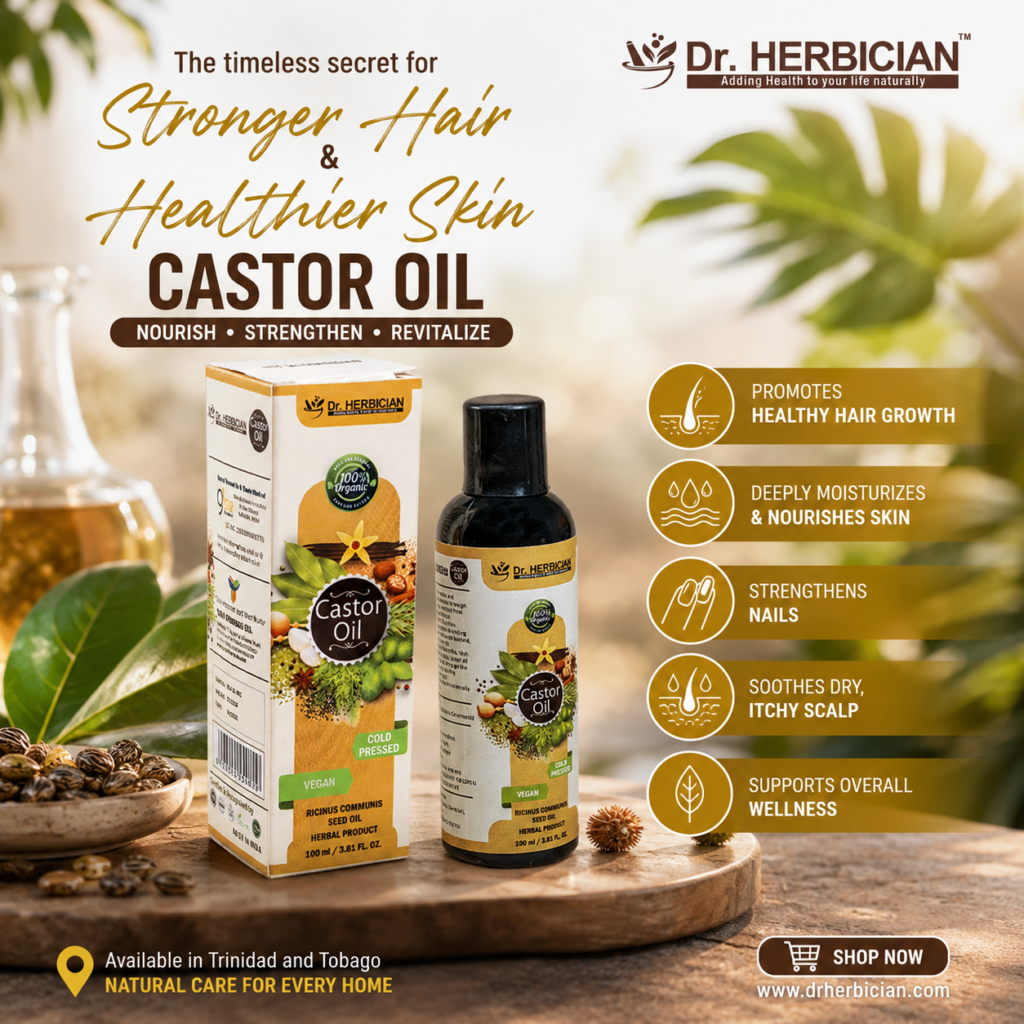
Castor oil is a plant-based oil pressed from the seeds of the castor bean plant (Ricinus communis). It’s thick, slightly yellow, and has been used for generations in hair and skin care routines around the world, including throughout the Caribbean.
The oil is naturally rich in fatty acids, which is part of why it feels so different from lighter oils like almond or jojoba. People have traditionally reached for castor oil to help seal in moisture on hair ends, soften rough patches of skin, and condition eyebrows and beards. It’s not a modern trend — it’s a practice passed down through households for decades, now backed by renewed interest in natural, minimally processed beauty products.
Not all castor oil is made the same way, though. Quality depends heavily on how the oil is extracted and how pure the final bottle is. Cold-pressed castor oil, extracted without high heat or harsh chemicals, tends to retain more of its natural properties than oil that’s been heavily refined. That’s why the label on the bottle matters just as much as the price tag.
Why Is Castor Oil Popular in Trinidad and Tobago?
Trinidad and Tobago’s climate is part of the reason natural oils like castor oil have such a strong following here. A few everyday realities make moisture management harder than it looks:
- Humidity pulls moisture out of hair strands and can leave skin feeling both oily on the surface and dry underneath.
- Sun exposure, especially for people who work outdoors or spend weekends at the beach, dries out hair and skin over time.
- Frequent washing, which is almost unavoidable in the heat, strips natural oils from both hair and skin.
- Salt air and pool chlorine, common for anyone near the coast or spending time in the water, can leave hair feeling straw-like.
- Busy schedules mean many people don’t have time for long, multi-step beauty routines — they need something simple that works.
This is exactly the environment where a multi-purpose oil earns its place. Instead of buying five different products for hair, elbows, cuticles, and eyebrows, many people in Trinidad and Tobago have simplified their routine around one versatile bottle of castor oil.
Common Hair and Skin Problems Castor Oil Can Help Address.
Here’s a practical look at everyday concerns and how a consistent moisturizing routine — with castor oil as part of it — can help.
Problem: Dry-feeling hair Hair that feels dry, straw-like, or hard to manage often lacks sealed-in moisture. Massaging a small amount of castor oil through the ends can help lock in the moisture that’s already there.
Problem: Frizzy hair Frizz is frequently a sign of moisture loss at the hair’s surface. A light coating of oil on damp hair can help smooth the outer layer and reduce that frizzy look.
Problem: Dry, flaky scalp A dry scalp can feel tight and uncomfortable. A gentle scalp massage with castor oil, left on for a while before washing, is a routine many people find soothing and grounding.
Problem: Rough elbows and knees These areas have thicker skin and fewer oil glands, so they dry out faster than the rest of the body. A thick oil like castor oil can help soften that rough texture with regular use.
Problem: Dry cuticles and hands Frequent handwashing and outdoor work take a toll on cuticles. A drop massaged in at night can help support softer-looking hands by morning.
Problem: Dull-looking skin Skin that looks tired or dull is often simply dehydrated. Adding a light layer of oil after a shower, while skin is still damp, can help support a smoother, more moisturized appearance.
None of this replaces a dermatologist for a diagnosed skin condition — but for everyday dryness, a consistent routine matters more than any single product.
How Dr. Herbician Castor Oil Fits Into Your Daily Routine.
This is where Dr. Herbician Castor Oil becomes genuinely useful — not as a miracle fix, but as a flexible tool you can build a routine around.
Hair care: Warm a small amount between your palms and work it through the ends of damp or dry hair to help tame frizz and support a smoother, healthier-looking finish.
Scalp massage: Once or twice a week, massage Dr. Herbician Castor Oil into the scalp for a few minutes before your regular wash day. Many people treat this as a relaxing part of their evening.
Body care: After a shower, while skin is still slightly damp, apply a thin layer to elbows, knees, and heels — the areas that dry out fastest in Trinidad and Tobago’s climate.
Beard care: A few drops massaged into the beard and underlying skin can help soften coarse hair and reduce that dry, brittle feel.
Eyebrow care: A small amount brushed through eyebrows at night is a simple addition to an existing bedtime routine.
Night skincare routine: Because it’s thicker than most facial oils, many people reserve Dr. Herbician Castor Oil for elbows, cuticles, and feet at night, letting it absorb while they sleep.
The common thread across all of these is consistency. One application won’t transform anything — but a few minutes a few times a week, over weeks, is where people start noticing a real difference in how their hair and skin feel.
Benefits of Dr. Herbician Castor Oil.
- Supports moisturized-looking hair, especially at the ends where dryness shows up first.
- Helps reduce the appearance of dryness on both hair and skin with regular use.
- Supports healthier-looking hair over time when paired with a consistent routine.
- Helps soften dry-feeling skin, particularly on elbows, knees, and hands.
- Multi-purpose use across hair, scalp, skin, beard, and eyebrows — one bottle, several jobs.
- Easy to include in an existing routine, with no complicated steps or long wait times required.
Dr. Herbician doesn’t position this oil as a cure for anything — it’s a self-care tool meant to support the look and feel of hair and skin as part of a broader, consistent routine.
How to Use Castor Oil Correctly.
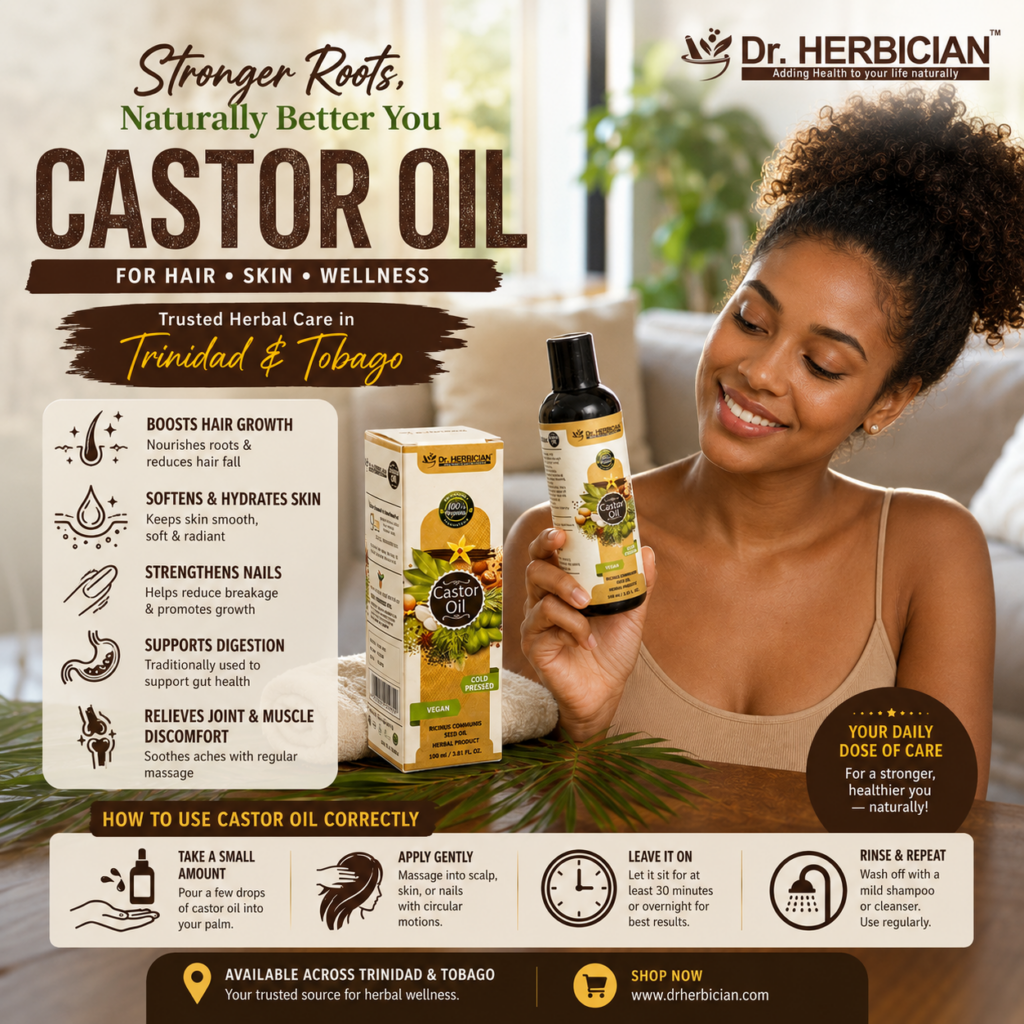
Hair: Apply a small amount to damp or dry hair, focusing on the ends. Avoid the roots if you have fine hair, since a little goes a long way.
Skin: Apply to clean, slightly damp skin so the oil has something to seal in. A thin layer is enough — this is a thick oil.
Body: Focus on drier areas like elbows, knees, heels, and hands. Apply after showering for the best results.
Beard: Massage a few drops into the beard and skin underneath, working from the roots outward.
Eyebrows: Use a clean spoolie or your fingertip to brush a small amount through brows at night.
Massage: Warm the oil slightly between your palms before applying — this makes it easier to spread and feels more comfortable on the skin.
Night routine: Because castor oil is thick and can take time to absorb, many people apply it as the last step before bed, especially on hands, feet, and elbows.
Storage: Keep the bottle tightly closed, away from direct sunlight and heat, ideally in a cool cupboard rather than a hot bathroom shelf.
Frequency: Two to four times a week is a realistic starting point for most people. Daily use is fine for small areas like cuticles and beards, but hair and scalp often do better with a few applications per week rather than daily use.
Castor Oil vs Other Natural Oils.
| Oil | Texture | Best For | Hair | Skin | Body |
|---|---|---|---|---|---|
| Castor Oil | Thick, rich | Sealing in moisture, dry ends, rough patches | Ends, scalp massage | Elbows, knees, cuticles | Hands, feet |
| Coconut Oil | Medium, solid at room temp | Everyday conditioning | Full-length, pre-wash treatment | Body moisturizer | Overall body use |
| Argan Oil | Light, fast-absorbing | Shine and softness | Frizz control, styling | Face-friendly for some skin types | Light body use |
| Jojoba Oil | Light, closest to natural skin oils | Balanced daily use | Scalp care | Facial moisturizer | Light, all-over use |
| Almond Oil | Light-medium | Gentle, everyday care | Shine, softness | Sensitive skin | General body use |
Castor oil stands out for its thickness and its ability to sit on the hair or skin’s surface, sealing in moisture rather than absorbing quickly. That’s why it works especially well on the driest areas — ends of hair, elbows, cuticles — rather than as a lightweight, all-over daily moisturizer.
How to Choose a Good Castor Oil.
Not every bottle on the shelf is equal. Before buying, check for:
- Cold-pressed processing — this generally preserves more of the oil’s natural qualities than heavily refined versions.
- A short, transparent ingredient list — ideally just castor oil, with no unnecessary fillers.
- Proper packaging — a dark or opaque bottle that protects the oil from light degradation.
- Purity claims backed by clear labeling, not vague marketing language.
- Manufacturing quality and hygiene standards, especially important for anything applied near the eyes or scalp.
- A trusted, established brand rather than an unlabeled or unbranded bottle.
- A visible expiry or manufacture date, since natural oils can go rancid over time.
Common Mistakes When Using Castor Oil.
- Using too much at once. A little goes a long way — too much leaves hair looking greasy rather than moisturized.
- Inconsistent use. Applying it once and expecting lasting change doesn’t reflect how any oil-based routine actually works.
- Buying poor-quality or diluted products. A cheap, unclear bottle often means a diluted or lower-quality oil.
- Ignoring the directions. Skipping steps like warming the oil first or applying to damp versus dry hair can change the results.
- Expecting overnight results. Hair and skin texture change gradually, not after a single use.
Quick Buying Checklist
✓ Ingredient list is short and transparent ✓ Packaging protects the oil from light and air ✓ Manufacturer is trusted and traceable ✓ Expiry date is clearly printed ✓ Storage instructions are included ✓ Usage directions are clear and easy to follow
Frequently Asked Questions.
Is castor oil good for hair? Many people include castor oil in their hair routine to help seal in moisture and support a smoother, healthier-looking appearance, especially at the ends.
Can I use castor oil daily? For small areas like cuticles or beards, daily use is generally fine. For hair and scalp, two to four times a week tends to work better for most people.
Is castor oil suitable for body care? Yes. It’s commonly used on elbows, knees, heels, and hands — areas that dry out faster than the rest of the body.
How should I apply castor oil? Warm a small amount between your palms and massage it into damp skin or hair, focusing on the driest areas.
Can I use castor oil overnight? Yes, many people apply it at night to areas like hands, feet, and eyebrows and let it sit while they sleep.
How long should I leave it on? For scalp treatments, 30 minutes to a few hours before washing is common. For skin, it can simply be left on as part of a nighttime routine.
Can I use castor oil on eyebrows? Yes. A small amount brushed through the brows at night is a common part of many people’s routines.
Can I use castor oil on my beard? Yes. Massaging a few drops into the beard and underlying skin can help soften coarse facial hair.
Is cold-pressed castor oil better? Cold-pressed oil is extracted without high heat, which generally helps preserve more of its natural qualities compared to heavily processed versions.
Where can I buy castor oil in Trinidad and Tobago? Quality castor oil, including Dr. Herbician Castor Oil, is available through local retailers and online, making it accessible for people across Trinidad and Tobago.
Does castor oil work for everyone? Results vary from person to person, since hair type, skin type, and consistency of use all play a role.
Can I mix castor oil with other oils? Yes, some people blend it with lighter oils like coconut or almond oil to make it easier to spread, especially on hair.
Why Choose Dr. Herbician Castor Oil?
With so many options on the shelf, quality and consistency are what set a product apart. Dr. Herbician Castor Oil is formulated with a focus on purity, so you know exactly what you’re applying to your hair and skin. It’s easy to use, genuinely multi-purpose across hair, scalp, skin, beard, and eyebrows, and simple enough to build into a daily or weekly routine without adding extra steps to your day. For people in Trinidad and Tobago looking for a reliable, accessible natural oil, Dr. Herbician Castor Oil is designed to be a practical, everyday addition to a self-care routine — available locally and online.
Conclusion.
Castor oil has stayed relevant for generations because it does something simple very well: it helps seal in moisture where hair and skin need it most. In a climate like Trinidad and Tobago’s, where humidity, sun, and frequent washing all work against you, that kind of consistent, no-fuss moisture support matters.
Choosing a quality product makes a real difference — cold-pressed, transparently labeled, and properly packaged castor oil will always outperform a diluted, unbranded bottle. If you’re ready to simplify your hair and skin care routine with one versatile product, Dr. Herbician Castor Oil is worth exploring as a steady, practical addition to your everyday self-care.