
Ashwagandha in Trinidad and Tobago: What to Know Before You Buy
Introduction.
If you’ve been searching for ashwagandha in Trinidad and Tobago, you’re probably trying to figure out one simple thing: does this herb actually fit into a normal, busy life — the kind with early mornings, traffic on the Priority Bus Route, work deadlines, and trying to fit in a workout somewhere in between? That’s a fair question, and it deserves a straight answer rather than a sales pitch.
Ashwagandha is an adaptogenic herb that has been used traditionally for centuries, and in recent years it has become one of the most searched wellness ingredients worldwide — including here at home. People in Trinidad and Tobago are increasingly interested in herbal and dietary supplements as part of a broader wellness-focused lifestyle, whether that means managing everyday stress, supporting an active routine, or simply being more intentional about daily habits.
This guide walks through what ashwagandha is, what it may be used for, how to evaluate supplement quality before you buy anything, and how different product formats compare. Along the way, we’ll introduce Dr. Herbician, a wellness brand offering Ashwagandha Root Extract Effervescent Tablets in Tamarind Flavor — not as a miracle fix, but as one option worth understanding on its own terms.
What Is Ashwagandha?
Ashwagandha (Withania somnifera) is a shrub traditionally used in Ayurvedic practices, a traditional Indian system of wellness that dates back thousands of years. The root of the plant is the part most commonly used in supplements, though other parts of the plant have also appeared in traditional formulations.
In traditional use, ashwagandha has been classified as an “adaptogen” — a term used for herbs believed to help the body adapt to everyday stressors. This is a traditional classification, not a formal medical diagnosis category, and it’s worth understanding that distinction from the start.
Ashwagandha root extract refers to a concentrated preparation made from the root, rather than the raw, dried root powder itself. Extracts are typically processed to isolate certain compounds found in the plant, which is one reason you’ll see both “root powder” and “root extract” on supplement labels — they are related but not identical.
Modern scientific interest in ashwagandha has grown alongside its traditional reputation, and a number of studies have explored its properties. However, it’s important to separate two things clearly:
- Traditional use — centuries of use within Ayurvedic practice, passed down as cultural and herbal knowledge.
- Modern scientific evidence — an evolving, mixed body of research that varies in quality, sample size, and conclusions.
Because research in this area is still developing, ashwagandha should be understood as a wellness supplement, not a medicine, and it should not be assumed to have the same weight of evidence behind it as a clinically tested pharmaceutical product.
Ashwagandha in Trinidad and Tobago: Why People Search for It.
Interest in ashwagandha in Trinidad and Tobago tends to follow familiar, everyday patterns rather than any single trend. A few common threads show up again and again:
- Busy work schedules. Between long commutes, shift work, and full calendars, many people are looking for ways to build small, manageable wellness habits into their day.
- Daily responsibilities. Balancing family, work, and personal time leaves little room for complicated routines, so simple additions — like a supplement dissolved in water — appeal to people looking for convenience.
- Exercise and active lifestyles. From beach runs in Maracas to gym sessions after work, people with active routines are often curious about herbal supplements that may complement recovery and everyday vitality.
- Consistency in wellness routines. Many readers are less interested in one-off trends and more interested in habits they can actually sustain.
- Format convenience. Whether someone prefers a tablet, capsule, gummy, or powder often comes down to lifestyle — for instance, a wellness tablet in Trinidad and Tobago’s warm climate might appeal to people who like a cool, drink-style ritual.
- General curiosity about herbal supplements. As dietary supplements become more visible online and in local stores, people naturally want to understand an ingredient before trying it.
None of this means ashwagandha is guaranteed to deliver a specific outcome for any individual — it simply reflects why the search term shows up so often locally.
What Are the Potential Wellness Uses of Ashwagandha?
People generally come across ashwagandha in connection with a handful of wellness areas. It’s worth breaking these down carefully, since traditional use and research interest are not the same as proof.
General stress-management support Ashwagandha is traditionally associated with the body’s normal response to everyday stress. Some modern research has explored this area, though findings vary and are not considered conclusive for every individual.
Daily calm and balance As part of a broader stress-management routine, some people include ashwagandha alongside habits like better sleep hygiene, physical activity, and mindful breaks during the day.
Sleep-related wellness Ashwagandha has traditionally been included in routines aimed at winding down in the evening, though it is not a sleep medication and should not be treated as one.
Energy and everyday vitality Some people associate ashwagandha with everyday vitality as part of a balanced lifestyle rather than as a stimulant-style energy product.
Exercise and recovery routines Active individuals sometimes explore ashwagandha alongside training and recovery habits, though individual experiences vary widely.
General wellbeing Overall, ashwagandha is most accurately described as an herb that may support a balanced daily routine — not a guaranteed solution for any specific health outcome.
To be clear:
- Traditional use covers centuries of Ayurvedic application.
- Research interest reflects an active but still-developing area of science.
- What cannot be guaranteed includes any claim that ashwagandha cures, treats, or prevents a disease, or that it guarantees stress relief, better sleep, weight loss, hormonal balance, improved fertility, increased testosterone, or immunity against illness.
How to Choose a High-Quality Ashwagandha Supplement.
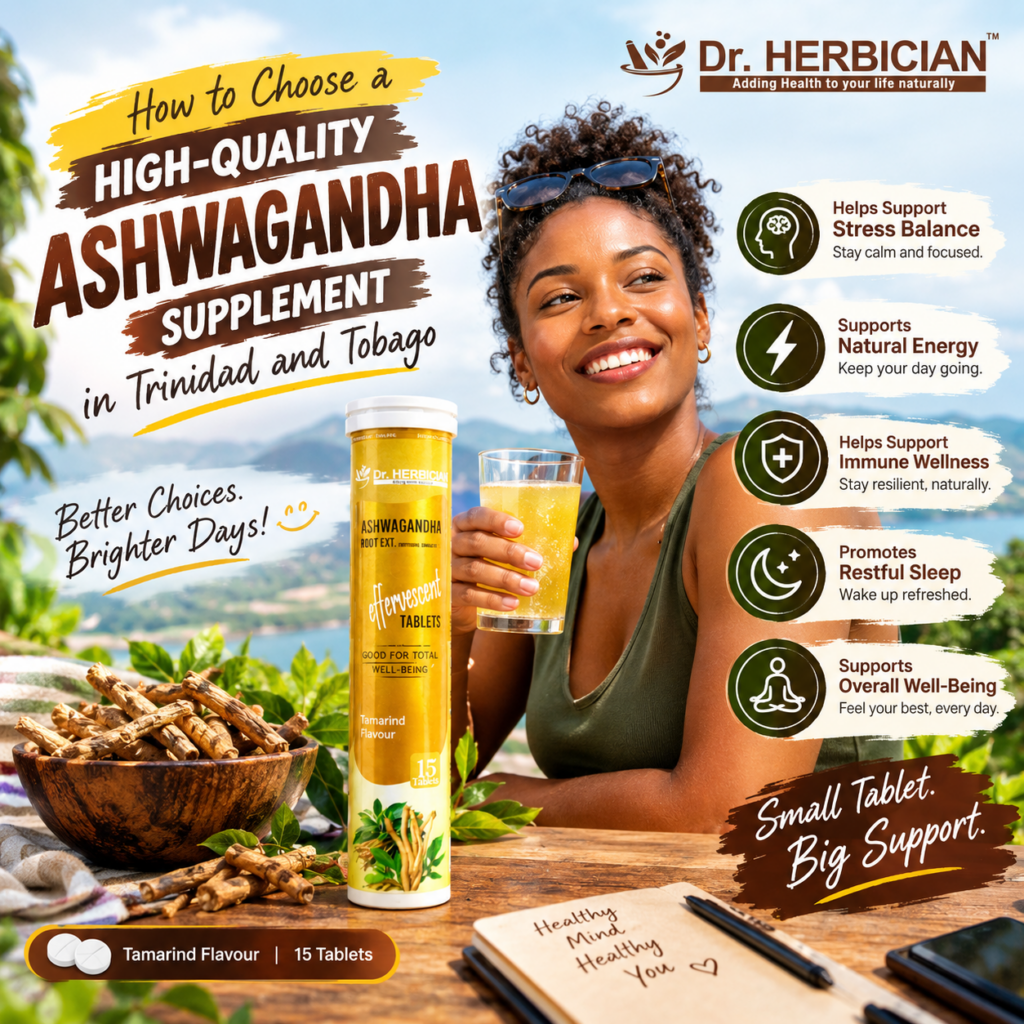
Marketing language alone doesn’t tell you whether a product meets a reasonable standard. If you’re trying to identify the highest quality ashwagandha for your own routine, here’s what to actually check:
- Clear product labeling. The label should state what’s in the product, in what form, and how it’s meant to be used.
- Clearly identified plant part. Look for whether the product uses root, leaf, or another part of the plant — this affects what you’re actually consuming.
- Root powder versus root extract. These are not interchangeable, and a trustworthy label will specify which one is used.
- Transparent ingredient information. A quality product lists its ingredients plainly rather than using vague terms like “proprietary blend” without explanation.
- Appropriate serving instructions. Reliable products include clear directions for use rather than leaving you to guess.
- Manufacturing and quality information, when available. Some brands publish details about how and where a product is made; this information is useful when it’s genuinely provided.
- Batch or quality-testing information, when verified. If a brand references testing, that information should be traceable rather than just implied.
- Brand transparency. A brand that is easy to contact and clear about what it does and doesn’t claim is generally more trustworthy than one that leans on vague promises.
- Packaging and storage information. Clear storage instructions (such as keeping tablets away from moisture) are a small but meaningful signal of a well-thought-out product.
- Avoiding exaggerated health claims. Be cautious of any product promising guaranteed results — that’s a marketing red flag, not a quality signal.
- Checking whether certifications are genuine and applicable. If a product claims a certification, it should be one that’s actually relevant to supplements and verifiable, not just a badge on the packaging.
In short, “highest quality ashwagandha” is a standard you evaluate through labeling, transparency, and consistency — not through the boldness of the marketing copy.
Root Supplement, Root Powder, and Root Extract Explained.
The term root supplement simply refers to a supplement made using the root of a plant, as opposed to the leaves, stem, or other parts. With ashwagandha, the root is the most commonly used part, but “root supplement” can still mean different things depending on how that root was processed.
Ashwagandha root powder is made by drying and grinding the root into a fine powder. It’s a relatively simple form of processing that keeps the root close to its natural state.
Ashwagandha root extract goes a step further — the root is processed to concentrate certain compounds, which typically results in a more potent preparation relative to the same weight of raw powder. However, without a specified extraction ratio or standardization detail on the label, it’s not accurate to assume all “extracts” are equally concentrated.
This is exactly why extraction details matter, and why reading the label is so important. Two products can both say “ashwagandha root extract” and still differ significantly in how they were made. As a general rule, root extract and root powder should never be treated as automatically identical — always check which one a product actually contains before comparing it to something else.
Organic Ashwagandha Benefits: What Does the Term Mean?
When people search for organic ashwagandha benefits, they’re often trying to understand whether “organic” makes a supplement meaningfully better. It’s a reasonable question, but the answer requires some nuance.
“Organic” is primarily a farming and agricultural standard — it generally refers to how a crop was grown (for example, without certain synthetic pesticides or fertilizers), not a statement about how effective the final supplement will be. General product quality — including how the root is processed, labeled, and manufactured — is a separate consideration from whether the raw plant was organically farmed.
Certification matters here because “organic” is a specific, regulated claim in many markets. A product should only be described as organic if it holds a genuine, verifiable certification — not simply because the packaging uses the word. If you see the term used loosely, it’s worth checking whether an actual certifying body backs it up.
It’s also worth remembering that organic status is not, by itself, proof of superior effectiveness. It speaks to farming practices, not to how well a particular formulation may work for any individual. Consumers should check for real certification before assuming a product is organic, rather than taking the word at face value.
Pure Ashwagandha Supplement: What Should Consumers Understand?
The phrase pure ashwagandha supplement usually reflects a simple consumer expectation: a product that contains ashwagandha without a long list of unnecessary fillers, additives, or unrelated ingredients.
That said, “pure” is often used loosely in supplement marketing, so it helps to know what to actually look for:
- Check the ingredient list. A short, clearly labeled ingredient list is a better indicator than the word “pure” printed on the front of the packaging.
- Understand the difference between a simple formula and a certified purity claim. A product with few ingredients isn’t automatically the same as one that has been independently tested and certified for purity.
- Look for transparent labeling. Reliable brands are specific about what’s included — and what isn’t — rather than relying on a single buzzword.
- Remember that “pure” doesn’t equal “medically effective.” Purity relates to formulation, not to guaranteed results for any particular health concern.
Ultimately, claims should be backed by accurate, verifiable information rather than by the word “pure” alone. When you’re comparing products, the ingredient panel will tell you more than the front-of-pack language ever will.
Tablets, Capsules, Gummies, and Effervescent Formats.
Ashwagandha (and wellness supplements generally) come in several formats, and the “best” one really depends on personal preference and daily routine.
| Format | General characteristics | Convenience considerations |
|---|---|---|
| Effervescent tablet | Dissolved in water before use | Useful for people who prefer a drink-style routine |
| Capsule | Swallowed directly | Convenient for people who prefer compact supplements |
| Gummies | Chewable format | Often preferred by people who dislike swallowing tablets |
| Powder | Mixed into a beverage or food | Flexible but requires preparation |
It’s worth noting that the term energy capsule is sometimes used in the broader supplement market to describe products focused on short-term energy support, which often rely on different ingredients (such as caffeine or B-vitamins) than an ashwagandha supplement does. An energy capsule is not automatically the same thing as an ashwagandha supplement, and the two shouldn’t be assumed to serve the same purpose. To be clear, Dr. Herbician‘s Ashwagandha Effervescent Tablets are not positioned as an energy capsule — they’re an ashwagandha root extract product in an effervescent tablet format.
Dr. Herbician Ashwagandha Root Extract Effervescent Tablets — Tamarind Flavor.
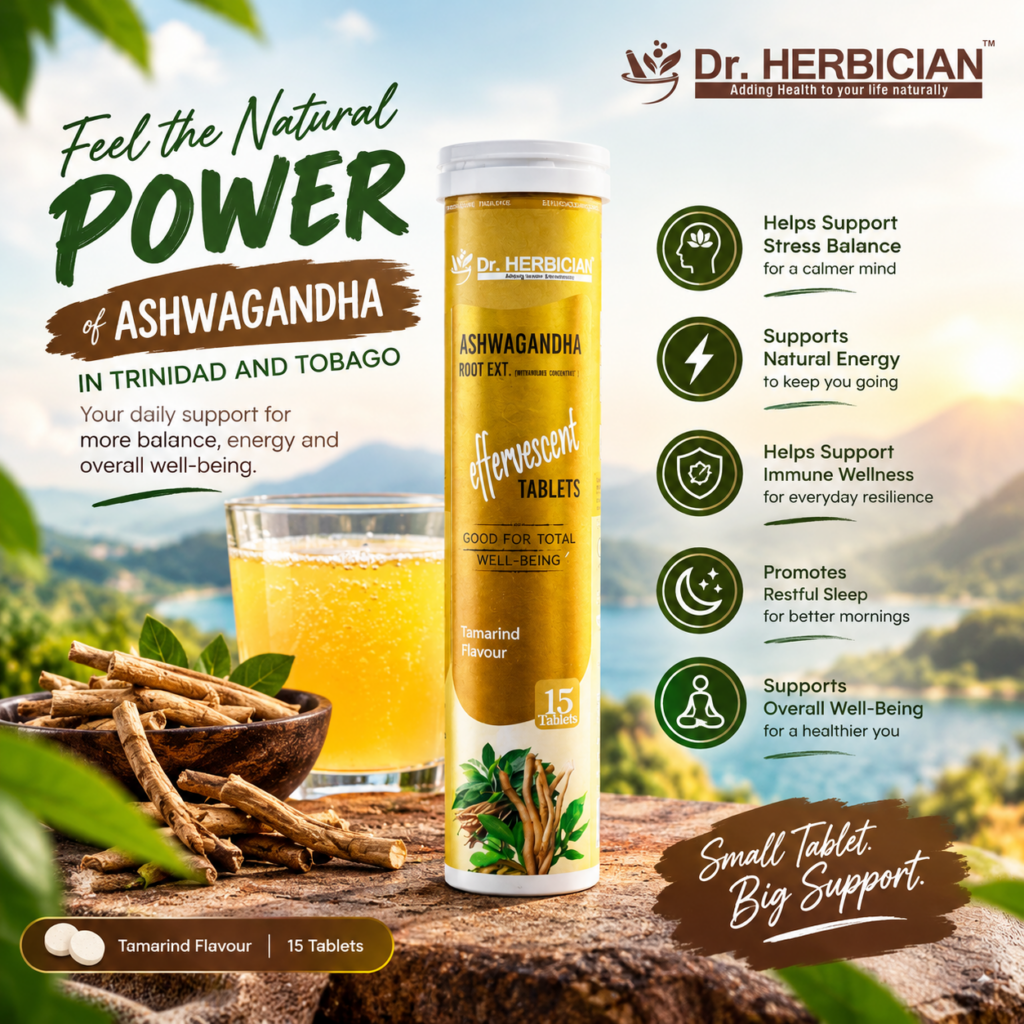
Dr. Herbician Ashwagandha Root Extract Effervescent Tablets (Tamarind Flavor) is a wellness product built around three straightforward elements: ashwagandha root extract, an effervescent tablet format, and a tamarind flavor profile that reflects a taste familiar to many people in the Caribbean.
Here’s what that means in practical terms:
- Ashwagandha root extract format. The product uses root extract rather than raw powder — as discussed above, this generally means a more concentrated preparation, though exact extraction details should always be confirmed on the product label itself.
- Effervescent tablet format. Rather than swallowing a capsule, you drop the tablet into water and let it dissolve, creating a drink-style ritual that some people find easier to build into a daily routine — for example, alongside a morning glass of water or an afternoon break.
- Tamarind flavor. Tamarind is a flavor many people in Trinidad and Tobago are already familiar with, which may make the daily habit feel more approachable compared to unfamiliar or overly medicinal-tasting products.
As with any supplement, Dr. Herbician recommends that consumers follow the exact instructions printed on the product label — including serving size and directions for use — rather than relying on general assumptions from an article like this one. This product should be viewed as a dietary supplement intended to complement a wellness routine, not as a medicine, and it is not intended to diagnose, treat, cure, or prevent any disease.
Dr. Herbician and Wellness Supplement Brands.
When comparing wellness supplement brands, it helps to know what separates a trustworthy brand from one relying purely on marketing appeal. Some useful things to look for include:
- Clear product information — ingredients, format, and intended use spelled out plainly.
- Transparent labeling — no vague or unexplained terms.
- Responsible marketing — avoiding exaggerated claims or fear-based messaging.
- Accessible customer support — a brand you can actually reach with questions.
- Realistic claims — language like “may support” rather than “guarantees.”
- Clear product instructions — how to use the product safely and correctly.
- Appropriate storage information — guidance on keeping the product effective.
- Brand consistency — a track record of communicating the same way across packaging, website, and customer service.
Dr. Herbician is one wellness brand readers in Trinidad and Tobago may come across while researching ashwagandha options. As with any brand, it’s worth reviewing the product label and available information directly rather than taking any single article’s word for it — and it should not be assumed to be “the best” brand without independently verifying that for yourself.
Ashwagandha Compared with Other Wellness Products.
Ashwagandha supplements are sometimes mentioned alongside other wellness products, but they generally serve different purposes and aren’t interchangeable.
- Ginseng energy drink — typically formulated for short-term energy or alertness, often with caffeine or similar stimulants, which is a different goal from ashwagandha’s traditional stress-related use.
- Gummies for health — a format, not an ingredient category; gummies can contain many different active ingredients, so the format alone doesn’t tell you what the product does.
- Immunity multivitamin and wellness multivitamin — designed to provide a broad range of vitamins and minerals, which is a different function from a single-herb adaptogen supplement.
- Multivitamin dietary supplement and multivitamin tablets — generally aim to fill nutritional gaps rather than target stress-related wellness specifically, though people sometimes ask whether one product type has particular benefits over another.
- Immune support juice — typically a beverage formulated around vitamin C or similar immune-associated nutrients, distinct from an herbal adaptogen.
The key takeaway: ashwagandha does not replace a multivitamin, an immune-support product, or an energy drink, and none of these products should be assumed to do the same job as another. If your goal is broad nutritional support, a multivitamin may be more relevant; if you’re interested in a traditional adaptogenic herb, ashwagandha serves a different purpose entirely. Many people simply use different products for different goals within the same wellness routine.
How to Include Ashwagandha in a Responsible Wellness Routine.
If you decide to try an ashwagandha supplement, a few practical habits can help you use it responsibly:
- Follow the product label. Always follow the specific serving size and directions printed on the packaging.
- Do not exceed the recommended serving. More is not automatically better.
- Maintain a balanced diet. A supplement is meant to complement your routine, not replace balanced nutrition.
- Get adequate sleep. Rest remains foundational to overall wellness, supplement or not.
- Stay physically active according to your own ability. Movement is a core part of most wellness routines.
- Drink enough water. Especially relevant with an effervescent tablet, which is dissolved in water before use.
- Avoid combining multiple supplements without checking their ingredients. Overlapping ingredients across products can add up in ways you might not expect.
- Track how your body responds. Everyone’s experience with a supplement can differ.
- Stop use and seek professional advice if unwanted reactions occur. Don’t try to push through a reaction — pause and consult a professional.
This guidance is general and educational — it is not personalized medical advice, and it shouldn’t be treated as a substitute for a conversation with a healthcare provider about your specific situation.
Safety Considerations and Who Should Seek Professional Advice.
Before using ashwagandha or any herbal supplement, it’s important to understand that individual circumstances vary, and some people should speak with a qualified healthcare professional first. This includes people who:
- Are pregnant or breastfeeding
- Take prescription or regular medication
- Have an existing medical condition
- Have concerns related to thyroid, liver, blood sugar, blood pressure, or hormone-related health
- Are preparing for surgery
- Have experienced reactions to herbal supplements in the past
This list is not exhaustive, and it isn’t a diagnostic tool. If you’re unsure whether ashwagandha is appropriate for you, the safest step is a direct conversation with a doctor, pharmacist, or other qualified healthcare professional who understands your health history.
Disclaimer: This article is for general informational purposes only. Dr. Herbician products, like ashwagandha supplements generally, are dietary/wellness supplements and are not intended to diagnose, treat, cure, or prevent any disease. Individual experiences may vary.
Frequently Asked Questions.
What is ashwagandha in Trinidad and Tobago? Ashwagandha in Trinidad and Tobago refers to the growing local interest in this traditional adaptogenic herb as part of general wellness routines. It’s available as a dietary supplement in various formats and is not classified as a medicine.
What is ashwagandha root extract? Ashwagandha root extract is a concentrated preparation made from the plant’s root, typically more concentrated than raw root powder. Exact concentration varies by product, so it’s important to check the specific label for details.
What should I look for in the highest quality ashwagandha? Look for clear labeling, an identified plant part, transparent ingredients, proper serving instructions, and realistic (not exaggerated) claims. “Highest quality” should be judged by transparency and consistency, not marketing language alone.
Is ashwagandha a root supplement? Most ashwagandha supplements are root supplements, since the root is the plant part most commonly used. However, always confirm this on the label, as not every ashwagandha product is guaranteed to use the same plant part or preparation.
What is the difference between ashwagandha root powder and root extract? Root powder is the dried, ground root in a relatively simple form. Root extract is processed to concentrate specific compounds, generally resulting in a more potent preparation per gram — though the exact ratio depends on the individual product.
What does a pure ashwagandha supplement mean? A “pure” ashwagandha supplement generally implies a short, transparent ingredient list without unnecessary additives. However, “pure” is not a regulated guarantee of effectiveness, so it’s worth checking the actual label rather than relying on the word alone.
Are organic ashwagandha benefits different from regular ashwagandha? “Organic” primarily describes farming practices, not the supplement’s effectiveness. Organic ashwagandha should only be labeled as such if it holds genuine certification — the term shouldn’t be assumed to mean automatically superior benefits.
How do ashwagandha effervescent tablets work as a supplement format? Effervescent tablets dissolve in water, creating a drink you consume rather than a tablet you swallow whole. This format is often chosen for convenience and for people who prefer a drink-style wellness ritual.
How are ashwagandha tablets different from an energy capsule? Ashwagandha tablets are built around a single adaptogenic herb, while an energy capsule often relies on different ingredients like caffeine, aimed at short-term alertness. The two are not interchangeable and typically serve different goals.
Can ashwagandha replace a multivitamin? No. Ashwagandha is a single-herb supplement traditionally associated with stress-related wellness, while a multivitamin is designed to provide a broader range of vitamins and minerals. They serve different purposes and are not substitutes for one another.
How should someone choose wellness supplement brands? Look for brands with transparent labeling, realistic (non-exaggerated) claims, accessible customer support, and clear usage instructions. Comparing several brands on these factors is more reliable than choosing based on marketing alone.
What should consumers in Trinidad and Tobago check before buying ashwagandha? Check the labeled plant part, whether it’s root powder or extract, serving instructions, ingredient transparency, and whether any certifications claimed are genuine. These checks apply regardless of where the product is purchased.
Is Dr. Herbician ashwagandha a medicine? No. Dr. Herbician Ashwagandha Root Extract Effervescent Tablets are a dietary/wellness supplement, not a medicine. The product is not intended to diagnose, treat, cure, or prevent any disease.
Who should consult a healthcare professional before using ashwagandha? People who are pregnant or breastfeeding, taking medication, managing a medical condition, preparing for surgery, or with concerns about thyroid, liver, blood sugar, blood pressure, or hormones should consult a healthcare professional first.
How should ashwagandha supplements be used responsibly? Follow the label’s serving instructions, avoid exceeding the recommended amount, maintain a balanced lifestyle, and pay attention to how your body responds. Stop use and seek professional advice if any unwanted reaction occurs.
Key Takeaways.
- Ashwagandha is a traditional adaptogenic herb, most commonly used in root form, with a growing (but still developing) body of modern research behind it.
- Before choosing a product, check the plant part used, whether it’s root powder or root extract, ingredient transparency, and serving instructions.
- Root powder and root extract are related but not identical — always read the label rather than assuming.
- Terms like “highest quality,” “organic,” and “pure” should be backed by verifiable label information and genuine certification, not marketing language alone.
- Effervescent tablets, capsules, gummies, and powders each offer different convenience trade-offs — the right format depends on personal routine and preference.
- Ashwagandha supplements are not medicines and should never be assumed to cure, treat, or prevent any disease, or to replace a multivitamin or other wellness product.
- Dr. Herbician Ashwagandha Root Extract Effervescent Tablets in Tamarind Flavor is one option for people in Trinidad and Tobago exploring this format — always reviewed alongside the product’s actual label.
- Consumers in Trinidad and Tobago, like anyone else, benefit most from making informed, label-based decisions rather than relying on promotional claims.
Call to Action
If ashwagandha sounds like something worth exploring as part of your own wellness routine, take the time to learn more about Dr. Herbician and review the product information and label directly before making a decision. If you have any medical questions, are pregnant or breastfeeding, take medication, or manage an existing health condition, speak with a qualified healthcare professional first. Choosing a supplement responsibly starts with reading the label — not with taking anyone’s word for it, including ours.