
Best Nutrition Products in Trinidad and Tobago: Complete 2026 Buying Guide.
Do you feel tired even after a full night’s sleep? Do you skip meals because work, traffic, or family life just don’t leave room for a proper lunch? You’re not alone. Between long commutes on the highway, irregular work hours, and a diet that leans heavy on rice, bread, and fried food, a lot of people in Trinidad and Tobago fall short on the vitamins and minerals their bodies actually need.
That gap is exactly why more households across the country are turning to nutrition supplements. But walking into a pharmacy or scrolling through an online store can feel overwhelming. Multivitamins, gummies, herbal capsules, protein powders – the shelf never seems to end, and not every bottle on it is worth your money.
This guide is for anyone in Trinidad and Tobago who wants a straight answer on what nutrition products actually do, which ones are worth buying, and how to pick the right one for your goals without wasting money on hype. Whether you’re a parent trying to keep your family well, an office worker looking for an energy boost, or someone managing a health condition, you’ll find practical answers here.
Here’s what you’ll learn:
- What nutrition products really are, and the different forms they come in
- Why demand for wellness products is growing across Trinidad and Tobago
- A simple framework for choosing the right supplement for your body and goals
- A side-by-side comparison of product types
- Mistakes to avoid when you’re buying
- Answers to the questions people ask most
What Are Nutrition Products?
Nutrition products are foods, tablets, capsules, powders, or liquids designed to add vitamins, minerals, herbs, or other nutrients to your diet. They’re not medicine, and they’re not meant to replace real food. Think of them as backup – filling in the gaps that a busy day, a limited diet, or a specific health goal can leave behind.
There are a few broad categories worth knowing:
- Vitamins and minerals – essential nutrients your body needs in small amounts, like vitamin C, vitamin D, iron, calcium, and magnesium
- Herbal supplements – plant-based products like ashwagandha, moringa, or turmeric, used traditionally to support energy, stress, and general wellness
- Protein and performance products – powders and bars aimed at people who are active, training, or trying to build muscle
- Specialty formulas – blends targeted at a specific goal, like joint support, digestive health, or sleep
Who actually needs them? In practice, most adults can benefit from some level of nutritional support, especially if their diet is inconsistent, if they’re under a lot of stress, or if they fall into a higher-need group like pregnant women, older adults, or people recovering from illness. That said, supplements work best as an addition to a reasonably balanced diet, not a substitute for one.
Why More People in Trinidad and Tobago Are Choosing Nutrition Products.
A few years ago, supplements were mostly something you picked up if you were sick or your doctor told you to. That’s changing fast, and the reasons are pretty specific to how life looks here right now.
Busy schedules are the biggest driver. Between traffic on the Priority Bus Route, long shifts, and juggling family responsibilities, cooking a nutritionally complete meal three times a day isn’t always realistic. A lot of people are choosing convenient options like gummies or tablets to make sure they’re not missing out entirely.
Diet quality is another factor. Local food culture has plenty of upsides, but a lot of everyday eating leans on refined carbohydrates and fried food, which don’t always deliver the full range of nutrients the body needs.
Health awareness has also grown. More people are paying attention to preventive health rather than waiting until something goes wrong, partly because chronic conditions like diabetes and hypertension are so common across the Caribbean. That awareness pushes people toward products that support long-term wellness rather than quick fixes.
Finally, access has improved. Local wellness brands and pharmacies now stock a much wider range of products than they did five years ago, and online ordering means people outside Port of Spain or San Fernando don’t have to travel far to get what they need.
How to Choose the Right Nutrition Products.
The right supplement for your neighbour might be the wrong one for you. Before you buy anything, it helps to think through a few personal factors.
- Age – nutrient needs shift as you get older; younger adults may prioritize energy and skin health, while older adults focus more on bone density and heart health
- Gender – women often need more iron and folate during reproductive years, while men may prioritize zinc and magnesium
- Lifestyle – someone with a physically demanding job has different needs from someone working a desk job
- Fitness goals – building muscle, losing weight, and general wellness call for different types of support
- Health conditions – if you’re managing diabetes, high blood pressure, or another chronic condition, some supplements can interact with medication, so check with a doctor or pharmacist first
- Budget – good products don’t have to be expensive, but the cheapest option is sometimes cheap because it’s cutting corners
- Quality and certifications – look for products manufactured under recognized quality standards with clear labelling and batch testing
- Ingredients – check the ingredient list, not just the marketing on the front of the box
A simple way to think about it: match the product to your specific need first, then check the label for quality, and only then compare price.
Different Types of Nutrition Products.
Here’s a closer look at the most common formats you’ll come across, along with the upsides and downsides of each.
Multivitamins
A broad daily formula covering multiple vitamins and minerals. Good for general coverage, but less targeted for a specific concern. Best for people who want simple, all-round support.
Herbal supplements
Plant-based ingredients like ashwagandha or moringa, often used for stress, energy, or immune support. These tend to work gradually rather than instantly, so consistency matters more than the first few doses.
Protein powders
Useful for people who train regularly or struggle to get enough protein from meals. Not necessary for most people who eat a balanced diet with enough meat, fish, eggs, or legumes.
Mineral supplements
Targeted products like iron, calcium, or magnesium, useful when a blood test or specific symptom points to a deficiency.
Effervescent tablets
Dissolve in water and are absorbed quickly, easy on the stomach. A good option for people who dislike swallowing pills.
Gummies
Easy to take and popular with people who don’t like tablets, including many kids and some adults. The tradeoff is that gummies often contain added sugar and sometimes lower doses per serving.
Powders
Flexible and easy to mix into a smoothie or drink, though they require a bit more prep than a capsule.
Capsules
Convenient, usually free of added sugar, and easy to dose accurately. A solid default option for most adults.
Liquid supplements
Absorbed quickly and useful for people who have trouble swallowing pills, though they typically need to be taken more consistently since they don’t stay shelf-stable as long once opened.
There’s no single “best” format. The right one depends on what you personally find easiest to stick with, since consistency matters more than the delivery method.
Top Nutrition Products for Different Health Goals.
- Daily wellness – a standard multivitamin covering the core vitamins and minerals is usually the simplest starting point
- Energy support – look for B-vitamins, iron, and adaptogenic herbs like ashwagandha
- Immunity – vitamin C, vitamin D, and zinc are the most researched options
- Bone health – calcium paired with vitamin D supports bone strength, especially with age
- Heart health – omega-3s, alongside a heart-conscious diet
- Women’s health – iron and folate during reproductive years, calcium later in life
- Men’s health – zinc and magnesium for energy, muscle function, and vitality
- Senior nutrition – vitamin D, calcium, and B12 as absorption naturally slows with age
- Office workers – B-vitamins and adaptogenic herbs to offset desk-job fatigue
- Athletes – protein, magnesium, and electrolytes for recovery and performance
- Students – B-vitamins and omega-3s to support focus during exams and study sessions
Nutrition Products Comparison Table.
Use this table as a quick reference when comparing product types side by side.
Product Type | Main Benefit | Best For | Suggested Form | Daily Use |
Multivitamin | General nutrient coverage | Anyone wanting all-round support | Tablet or gummy | 1 serving daily |
Herbal Supplement (e.g. Ashwagandha) | Stress and energy support | Adults dealing with daily stress | Capsule | 1-2 capsules daily |
Protein Powder | Muscle repair and growth | Active individuals and athletes | Powder | 1 scoop post-workout |
Iron Supplement | Supports healthy blood levels | Women, especially reproductive years | Tablet | As advised by a doctor |
Calcium + Vitamin D | Bone strength | Seniors and postmenopausal women | Tablet | 1 serving daily |
Vitamin C | Immune support | Everyone, especially flu season | Effervescent or gummy | 1 serving daily |
Omega-3 | Heart and brain support | Adults over 30 | Softgel | 1-2 softgels daily |
B-Complex | Energy and focus | Office workers and students | Capsule | 1 serving daily |
Common Mistakes People Make When Buying Nutrition Products.
Buying only by price
The cheapest bottle on the shelf isn’t automatically a bad choice, but price alone tells you nothing about ingredient quality or dosage accuracy.
Ignoring ingredients
Marketing claims on the front of a package can say a lot without saying anything useful. The ingredient list on the back is where the real information is.
Overdosing
More isn’t always better. Taking several products that all contain the same vitamin can push you well past the recommended daily amount without you realizing it.
Not checking certifications
Products manufactured under recognized quality and safety standards are far less likely to contain contaminants or inaccurate dosing.
Choosing fake or unregulated products
Especially online, it’s worth buying from a source you trust rather than the lowest price you can find on an unfamiliar site.
Ignoring expiry dates
Supplements do lose potency over time, and some ingredients can degrade past their expiry date. Always check before you buy, especially with imported stock that may have sat on a shelf a while.
Expert Tips Before Buying Nutrition Products.
How to read labels
Look past the front of the pack. The supplement facts panel should show you the actual dose of each active ingredient, not just a list of what’s included.
Ingredient quality
Look for recognizable forms of vitamins and minerals rather than vague “blends,” and be cautious of products with long lists of fillers, dyes, or artificial flavours near the top of the ingredient list.
Dosage
Match the dose to your actual need. If you’re not sure, a pharmacist can help you interpret whether a product’s dosage is appropriate for you.
Storage
Heat and humidity, both common in Trinidad and Tobago, can shorten a supplement’s shelf life faster than the label suggests. Store products in a cool, dry place, away from the kitchen stove or a sunny windowsill.
Safety
If you’re pregnant, breastfeeding, or managing a chronic condition, check with a doctor or pharmacist before starting anything new, especially herbal products, which can interact with medication.
Professional advice
A five-minute conversation with a pharmacist before you buy can save you money and steer you away from a product that isn’t right for your situation.
Frequently Asked Questions.
Q: Which nutrition products should beginners buy?
A: A straightforward multivitamin is usually the best starting point. It covers the basics without requiring you to figure out several targeted products at once.
Q: Are multivitamins necessary for everyone?
A: Not strictly necessary if your diet is well balanced, but most people fall short in at least one or two nutrients, which is where a multivitamin can help close the gap.
Q: Can nutrition products replace healthy food?
A: No. Supplements are designed to fill gaps, not replace whole meals. Real food provides fibre, water, and nutrient combinations that a tablet can’t fully replicate.
Q: How long before I notice results?
A: It varies by product and by person. Some, like vitamin C, may show effects within days, while others, like herbal adaptogens, often take several weeks of consistent use before you notice a difference.
Q: Can I take multiple supplements together?
A: Often yes, but it’s worth checking for overlapping ingredients so you don’t accidentally exceed the recommended daily amount of any one nutrient.
Q: Are herbal supplements safe?
A: Generally yes when taken as directed, but “natural” doesn’t automatically mean risk-free. Some herbs can interact with medications, so check with a pharmacist if you’re on prescription drugs.
Q: What’s the difference between a vitamin and a mineral?
A: Vitamins are organic compounds your body needs in small amounts, while minerals are inorganic elements like calcium and iron. Both are essential, just chemically different.
Q: Do gummies work as well as tablets?
A: Generally yes, though gummies sometimes contain lower doses and added sugar compared to tablets or capsules.
Q: Is it better to buy local or imported supplements?
A: Both can be good options. What matters more is checking the manufacturing standards, ingredient sourcing, and expiry dates rather than where the product was made.
Q: Can children take nutrition supplements?
A: Some products are formulated specifically for children, but it’s best to check with a pediatrician before giving a child any supplement, including gummies.
Q: What should I do if I experience side effects?
A: Stop taking the product and speak with a pharmacist or doctor. Side effects are uncommon at recommended doses but can happen, especially with herbal ingredients.
Q: How do I store supplements properly in a hot climate?
A: Keep them in a cool, dry cupboard away from direct sunlight and kitchen heat. Avoid storing supplements in the bathroom, where humidity is higher.
Q: Do nutrition products expire?
A: Yes. Most have a shelf life of one to three years, and potency can decline after the expiry date, especially for probiotics and certain vitamins.
Q: Should I take supplements with food or on an empty stomach?
A: Fat-soluble vitamins like A, D, E, and K are absorbed better with a meal that contains some fat. Water-soluble vitamins are more flexible either way.
Q: How do I know if a brand is trustworthy?
A: Look for clear labelling, batch testing, transparent ingredient sourcing, and a manufacturer that’s easy to reach if you have questions.
Why Choose Dr Herbician Nutrition Products?
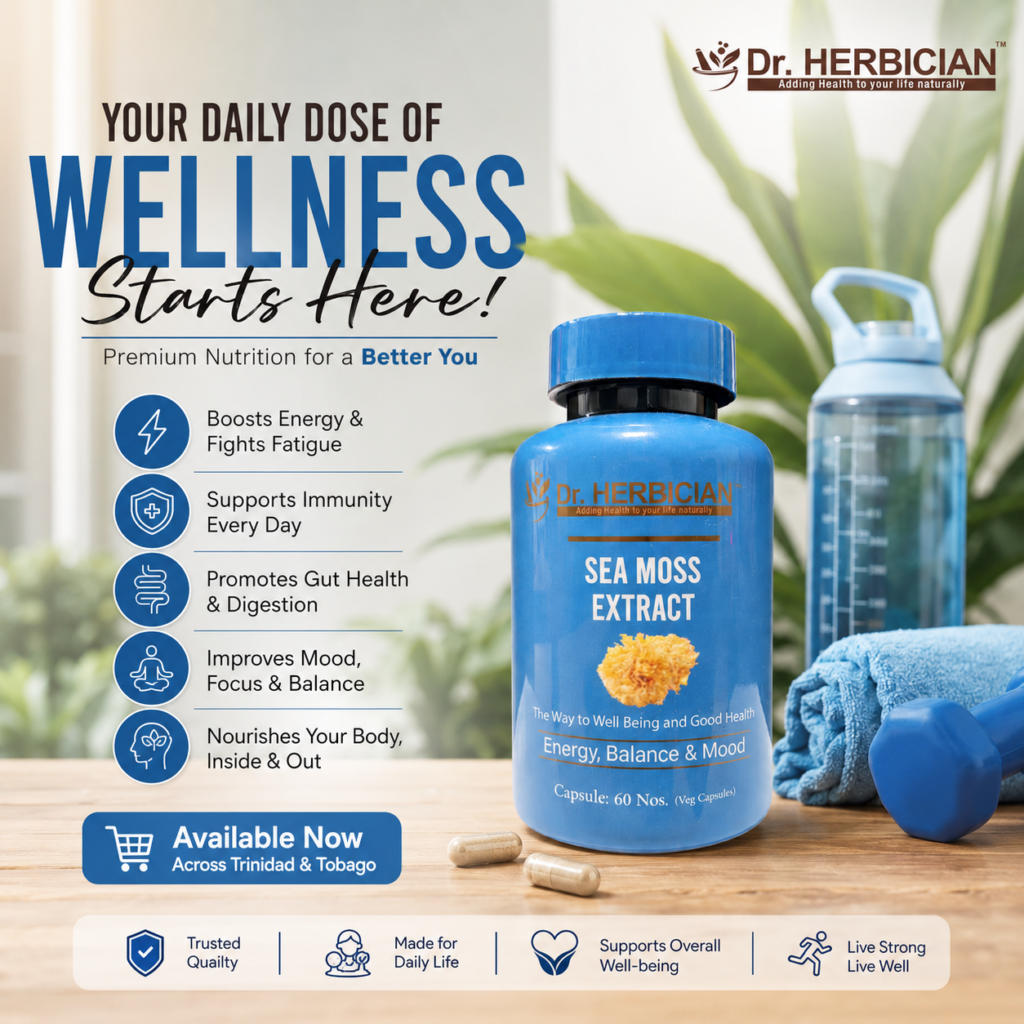
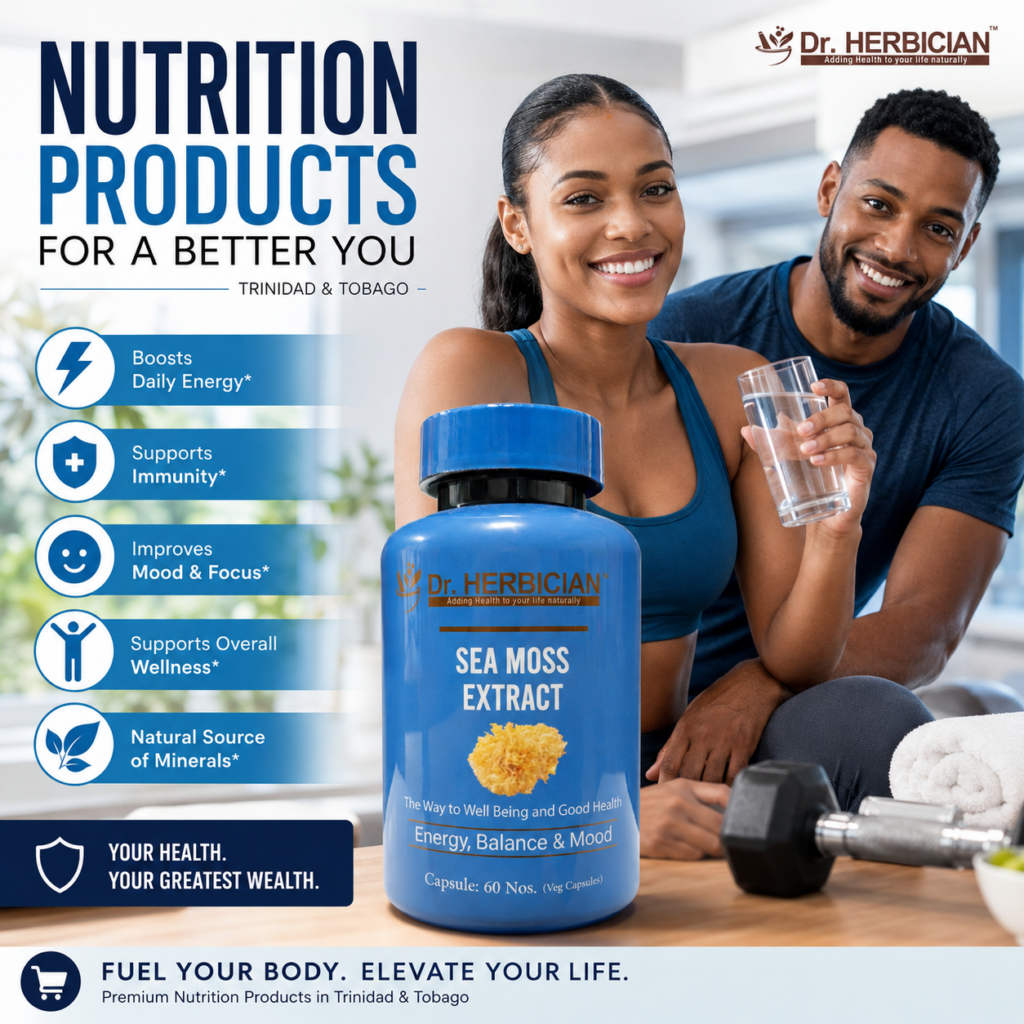
Once you know what to look for, the next step is finding a brand that actually delivers on it. Dr Herbician formulates its nutrition products with an emphasis on ingredient transparency and consistent manufacturing standards, so what’s on the label matches what’s in the bottle.
The range covers several of the categories discussed above, including multivitamins, herbal formulas, and targeted wellness blends, giving you the option to build a routine that fits your specific goals rather than settling for a one-size-fits-all product.
Availability across Trinidad and Tobago means you don’t have to hunt for stock or wait weeks for an imported order, and the brand’s focus on herbal and natural formulations reflects a broader approach to wellness rather than a quick, isolated fix. As with any supplement, it’s worth matching the specific product to your own needs and checking with a pharmacist if you’re managing a health condition or taking medication.
Conclusion.
Choosing the right nutrition products doesn’t have to be complicated. Start with your specific goal, whether that’s more energy, better immunity, or general daily wellness. Check the label for real ingredient quality rather than marketing claims. Match the format – tablet, gummy, powder, or capsule – to what you’ll actually stick with day to day. And when in doubt, a quick conversation with a pharmacist can point you in the right direction.
Trinidad and Tobago has more quality options available now than ever before, both local and international. Take the time to choose thoughtfully, and your daily routine will thank you for it.
Ready to build a wellness routine that actually fits your life? Explore Dr Herbician‘s range of nutrition products and find the ones that match your goals.